
Business Funding Guide: How to Prepare Your Business Before Applying for Funding
Introduction
Your Business Doesn't Need Funding First.
It Needs to Become Fundable.
Many business owners believe funding is the solution to their growth challenges.
"If I could just get funding, everything would improve."
Sometimes that's true.
But more often, funding exposes problems that already existed.
Money doesn't fix broken systems.
It simply allows broken systems to fail faster.
Businesses that successfully secure funding usually have something in common:
They've already built a business worth investing in.
That's why experienced investors, banks, grant providers and lenders rarely ask only one question:
"How much money do you need?"
Instead, they ask questions like:
Is this business profitable?
Does it have customers?
Are its financial records accurate?
Is there evidence of demand?
Can management execute?
Will this investment generate a return?
Is the business scalable?
Funding is rarely about convincing someone to give you money.
It's about proving your business is prepared to use that money responsibly.
This guide explains how to prepare your business before applying for funding and how to increase your chances of securing investment.
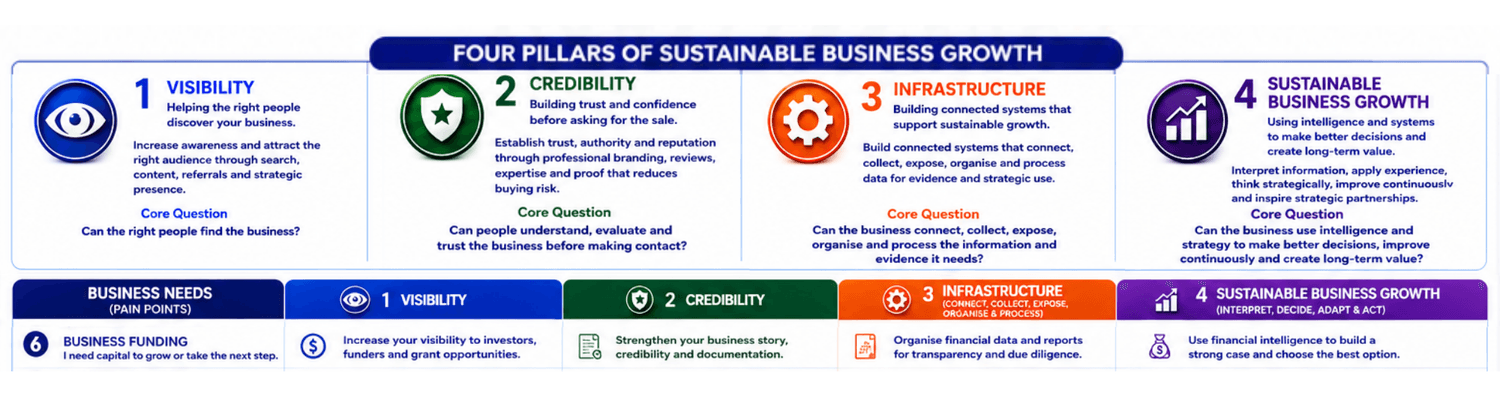
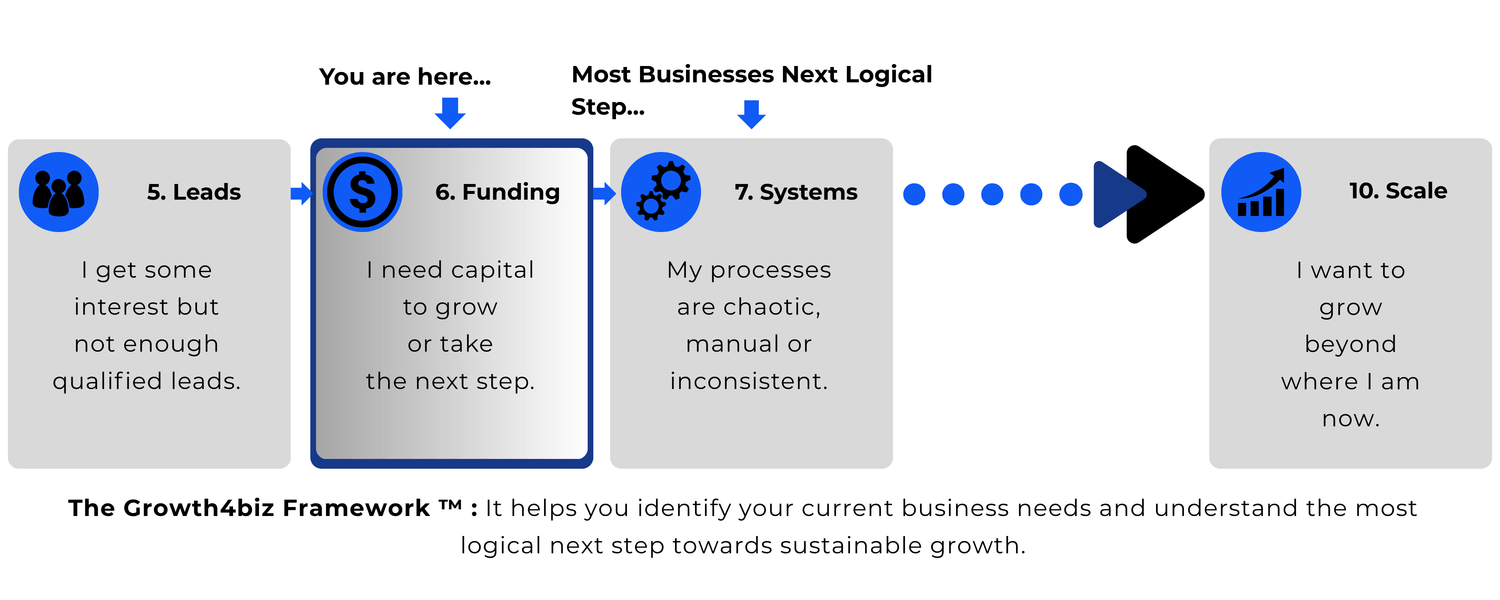
Your Position in the Growth4biz Framework™
Need — Business Funding
Why Businesses Seek Funding
Businesses usually pursue funding because they want to accelerate growth.
Common reasons include:
Purchasing equipment
Expanding operations
Hiring staff
Opening additional locations
Increasing inventory
Developing new products
Investing in technology
Marketing and customer acquisition
Exporting to new markets
Improving cash flow
Funding should support a growth strategy—not replace one.
The Biggest Myth About Business Funding
Many entrepreneurs assume funding comes first.
In reality, successful businesses usually follow this sequence:
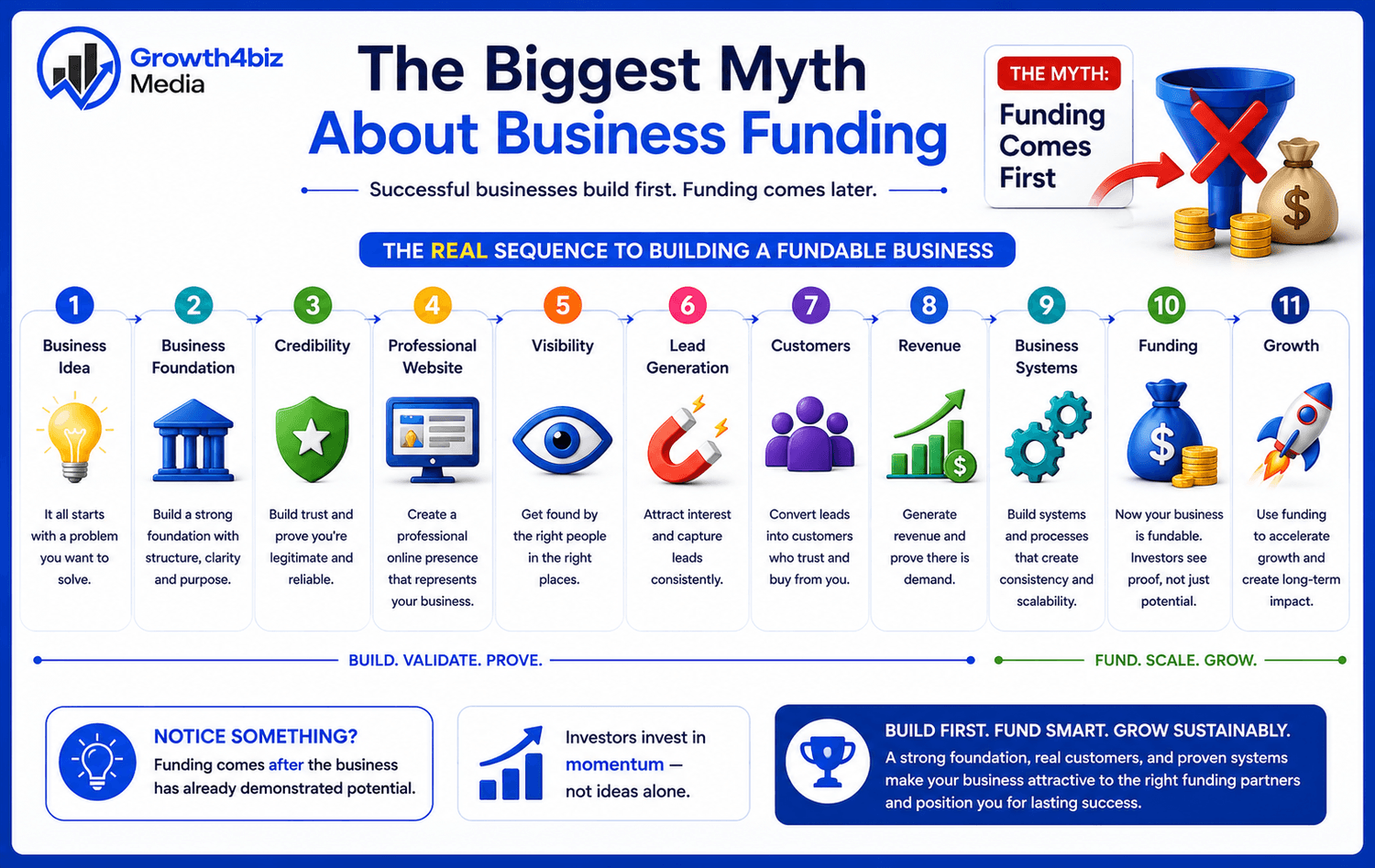
Notice something?
Funding comes after the business has already demonstrated potential.
Investors invest in momentum—not ideas alone.
What Makes a Business "Fundable"?
Every funding provider evaluates risk.
The lower your perceived risk, the more likely funding becomes.
A fundable business typically demonstrates:
A Clear Business Model
People understand:
What you sell
Who you sell to
How you make money
Why customers choose you
A Proven Market Demand
Evidence may include:
Existing customers
Sales history
Waiting lists
Website enquiries
Purchase orders
Signed contracts
Demand is far more persuasive than assumptions.
Strong Financial Records:
Funding providers want accurate records such as:
Income statements
Balance sheets
Cash flow statements
Tax compliance
Bank statements
Financial forecasts
Poor bookkeeping creates unnecessary risk.
Operational Systems
Can the business continue growing?
Or is everything dependent on the owner?
Businesses with systems are generally viewed as more investable.
Examples include:
CRM systems
Accounting software
Inventory systems
Standard Operating Procedures (SOPs)
Reporting dashboards
A Professional Brand
First impressions matter.
Businesses with professional branding appear more established.
This includes:
Logo
Website
Business email
Marketing materials
Social media consistency
Professional presentation influences confidence.
Types of Business Funding
Not every funding option is suitable for every business.
Common options include:
Bank Loans
Best for:
Established businesses
Equipment purchases
Property
Expansion
Advantages:
Predictable repayment
Larger funding amounts
Challenges:
Credit history
Collateral
Financial statements
Government Grants
Often support:
Small businesses
Manufacturing
Agriculture
Innovation
Export development
Youth entrepreneurship
Advantages:
May not require repayment
Challenges:
Competitive application processes
Strict eligibility criteria
Private Investors
Investors exchange capital for ownership or returns.
They usually evaluate:
Growth potential
Management quality
Market opportunity
Competitive advantage
Venture Capital
Usually suitable for:
High-growth businesses
Technology
Scalable startups
Investors expect rapid growth and strong returns.
Angel Investors
Often invest in early-stage businesses.
They may also provide:
Mentorship
Networks
Strategic advice
Asset Finance
Suitable when purchasing:
Vehicles
Machinery
Equipment
Technology
The asset often serves as security.
Supplier Credit
Sometimes suppliers provide:
Extended payment terms
Inventory financing
Trade credit
Improving cash flow without traditional loans.
What Funding Providers Look For
Although every institution has different requirements, many evaluate similar areas.
Leadership
Do the owners appear capable?
They assess:
Experience
Industry knowledge
Decision-making
Commitment
Financial Stability
Can the business repay funding?
Indicators include:
Profitability
Cash flow
Debt levels
Financial controls
Market Opportunity
Is there enough demand?
Questions include:
Market size
Competition
Customer demand
Growth potential
Competitive Advantage
What makes the business different?
Examples include:
Intellectual property
Proprietary systems
Brand reputation
Customer loyalty
Specialist expertise
Growth Strategy
Businesses should clearly explain:
How funding will be used
Expected outcomes
Timeline
Return on investment
Funding without a plan creates uncertainty.
Preparing Your Business Before Applying
Many applications fail because businesses prepare documents only after they find funding opportunities.
Instead, prepare first.
Recommended checklist:
Business registration
Tax compliance
Financial statements
Business plan
Cash flow forecast
Professional website
Google Business Profile
Marketing strategy
Customer testimonials
Sales history
Business bank account
Insurance
Legal agreements
Contracts
SOPs
Organisational structure
The more complete your business appears, the lower the perceived risk.
Common Reasons Funding Applications Are Rejected
Many businesses are declined because of preventable issues.
Common reasons include:
Poor financial records
Weak cash flow
No clear business plan
No proven demand
Inconsistent revenue
Limited market research
Weak management
Poor credit history
Unrealistic projections
Missing documentation
Preparation dramatically improves your chances.
Funding Doesn't Solve Every Problem
Receiving funding won't automatically fix:
Poor marketing
Weak sales
Low visibility
Lack of customers
Poor customer service
Broken systems
Operational inefficiencies
These problems usually become larger after expansion.
Growth magnifies strengths—and weaknesses.
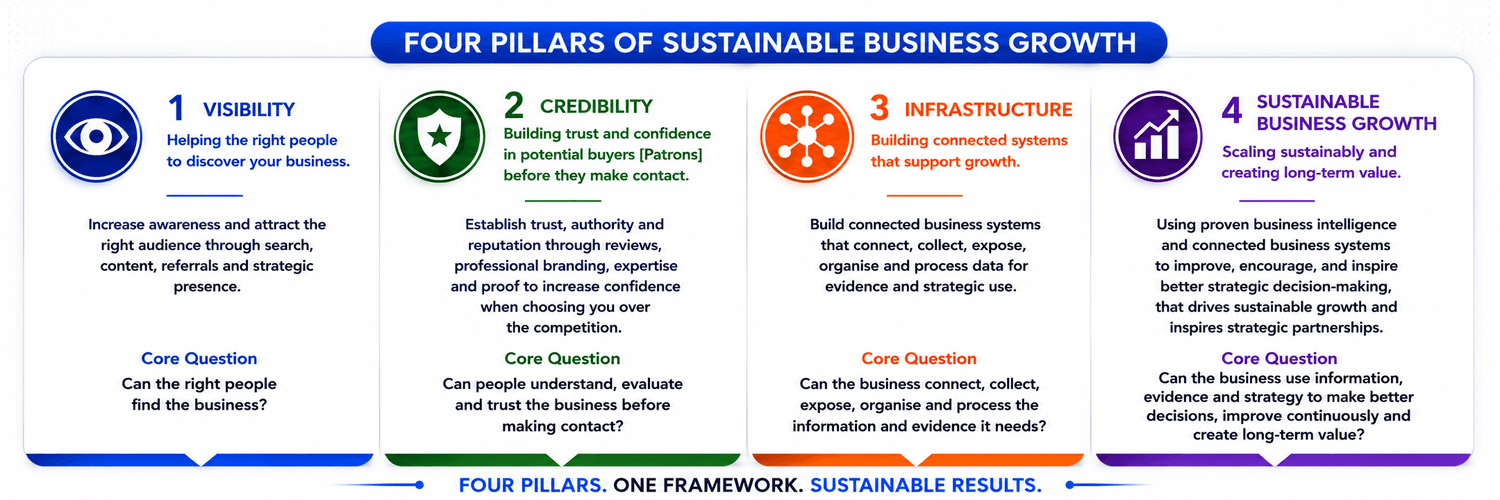
The Growth4biz Funding Readiness Framework™
At Growth4biz Media, we believe businesses become funding-ready by strengthening every stage of their business—not just their finances.
Our framework focuses on building:
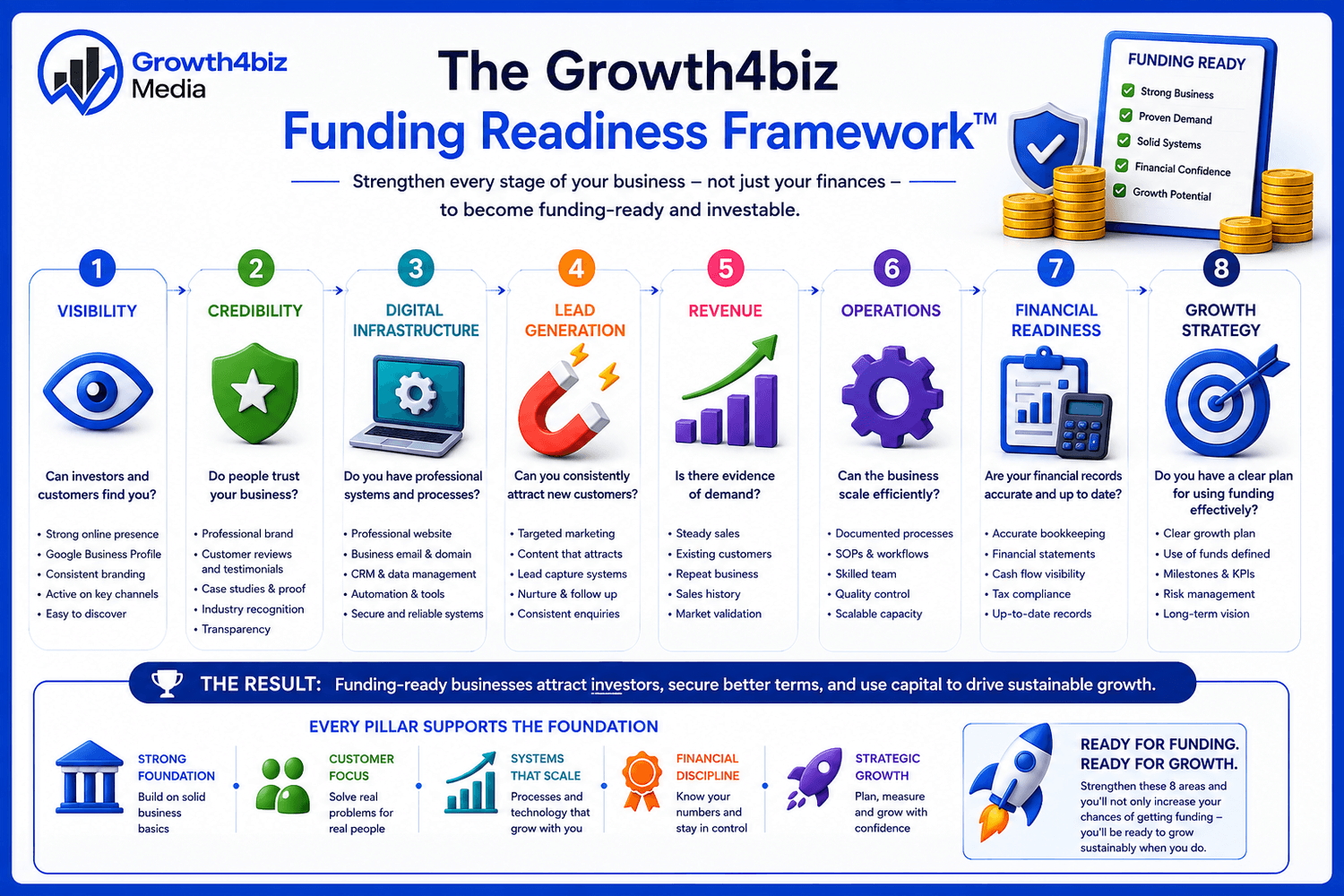
Businesses that strengthen these areas are often better positioned to secure funding and use it successfully.
Funding Readiness Checklist
Before submitting an application, ask yourself:
Is my business profitable or moving toward profitability?
Do I have accurate financial records?
Can I clearly explain my business model?
Have I validated customer demand?
Does my website look professional?
Are my marketing systems generating enquiries?
Can I explain exactly how the funding will be used?
Have I prepared realistic financial forecasts?
Can I measure business performance?
Would I invest in my own business based on the available evidence?
If you hesitate on several of these questions, your next priority may be improving your business rather than submitting funding applications.
Frequently Asked Questions
Yes, but it is generally more difficult. Many lenders and investors prefer businesses with evidence of customer demand, financial planning, and a viable business model.
In most cases, yes. A well-structured business plan demonstrates your objectives, market understanding, financial projections, and growth strategy.
It can. A professional website reinforces credibility, showcases your products or services, and provides funding providers with additional confidence in your business.
Generally, it is better to validate your business idea and attract customers first. Demonstrated demand significantly strengthens most funding applications.
Final Thoughts
Funding should never be viewed as the starting point of business growth.
It is an accelerator.
The businesses most likely to secure funding are often those that have already invested in their visibility, credibility, systems, customer acquisition, and operational readiness.
Before asking, "Where can I get funding?" ask a more valuable question:
"Would someone confidently invest in my business as it stands today?"
If the answer is "not yet," focus on strengthening your business first. The stronger your foundation, the more attractive your business becomes to investors, lenders, and funding partners.
At Growth4biz Media, we believe sustainable business growth isn't built by chasing funding—it is built by creating a business that is genuinely worth funding.
SHARE




Copyright 2026 • Growth4biz Media (Pty) Ltd.