
Strategic Business Partnerships Guide: How to Build Partnerships That Accelerate Business Growth
Introduction
Business growth doesn't always require doing more.
Sometimes, it requires doing more together.
Many successful businesses reach a point where they realise they cannot provide every service, reach every market or solve every customer problem alone.
Instead of viewing other businesses as competitors, they begin looking for opportunities to collaborate.
Strategic partnerships allow businesses to combine strengths, share resources, reach new audiences and create greater value for customers.
At Growth4biz Media, we believe partnerships are one of the most overlooked drivers of sustainable business growth.
This guide explains what strategic partnerships are, why they matter, how to build them successfully, and how they fit into the Growth4biz Framework™.
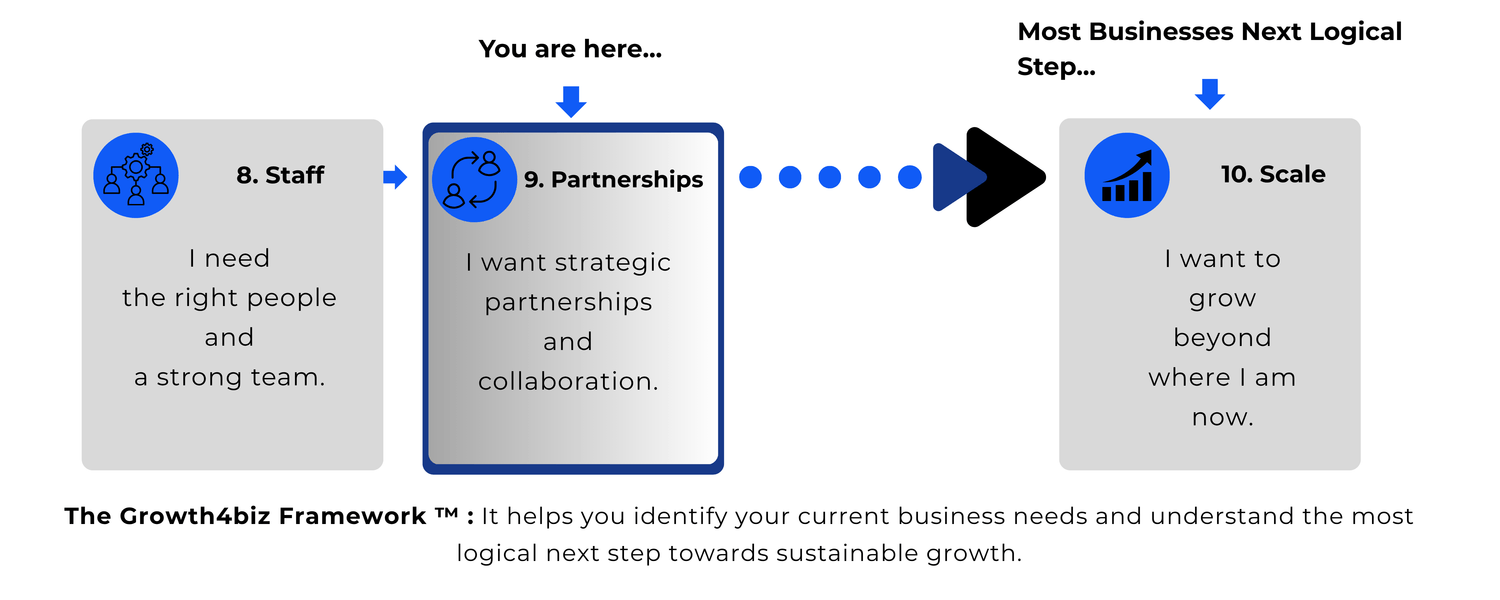
Your Position in the Growth4biz Framework™
Need — Strategic Partnerships
What Is a Strategic Business Partnership?
A strategic business partnership is a relationship between two or more businesses that work together to achieve shared goals while remaining independent.
Unlike mergers or acquisitions, partnerships allow each business to maintain its own identity while creating mutual value.
The objective is simple:
Together, both businesses become stronger than they could individually.
Strategic partnerships may involve:
Referrals
Joint marketing
Shared expertise
Technology integration
Service collaboration
Product bundling
Co-hosted events
Educational content
Community initiatives
The best partnerships benefit everyone involved—including the customer.
Why Strategic Partnerships Matter
As businesses grow, opportunities become more complex.
Customers expect complete solutions rather than isolated services.
Partnerships allow businesses to deliver greater value without having to become experts in every field.
Benefits include:
Access to new audiences
Increased credibility
More qualified referrals
Shared marketing opportunities
Reduced acquisition costs
Expanded service offerings
Faster innovation
Improved customer experience
Sustainable long-term growth
The right partnership creates opportunities that neither business could easily achieve alone.
Common Types of Strategic Partnerships
Partnerships can take many forms.
Some of the most common include:
Example 1:
Referral Partnerships
Businesses recommend each other's services to existing customers.
Example 2:
A website agency referring clients to a professional photographer.
Service Partnerships
Two businesses combine complementary services.
Example 3:
A branding agency partnering with a website development company.
Technology Partnerships
Businesses integrate software or digital platforms.
Example 4:
A CRM provider partnering with an automation specialist.
Marketing Partnerships
Businesses promote one another through shared campaigns.
Examples include:
Joint webinars
Guest articles
Social media collaborations
Email marketing
Podcast interviews
Example 5:
Supplier Partnerships
Businesses strengthen relationships with trusted suppliers to improve efficiency and customer satisfaction.
Example 6:
Community Partnerships
Working with local organisations, schools, charities or business associations to create shared value.
The Biggest Partnership Mistake
Many businesses look for partners that are bigger than they are.
Size isn't the most important factor.
Alignment is.
Successful partnerships are built on:
Shared values
Complementary services
Similar customer audiences
Professionalism
Trust
Reliability
Mutual respect
The best partner isn't necessarily the biggest.
It's the one that helps create value for everyone involved.
How to Identify the Right Business Partners
Start by asking:
Who already serves my ideal customer?
What services do my customers frequently need after working with me?
Which businesses share my values?
Who consistently delivers quality work?
Which businesses complement rather than compete with mine?
Good partnerships solve customer problems more completely.
Characteristics of Successful Partnerships
Strong partnerships usually have several things in common.
They have:
Clear expectations
Defined responsibilities
Open communication
Mutual benefit
Written agreements
Regular reviews
Shared goals
Long-term commitment
Without these foundations, partnerships often become one-sided or short-lived.
Building Trust Before Collaboration
Just as customers need trust before buying, businesses need trust before partnering.
Trust develops through:
Professional communication
Consistent delivery
Transparency
Reliability
Shared successes
Integrity
Businesses that consistently demonstrate professionalism become attractive partners.
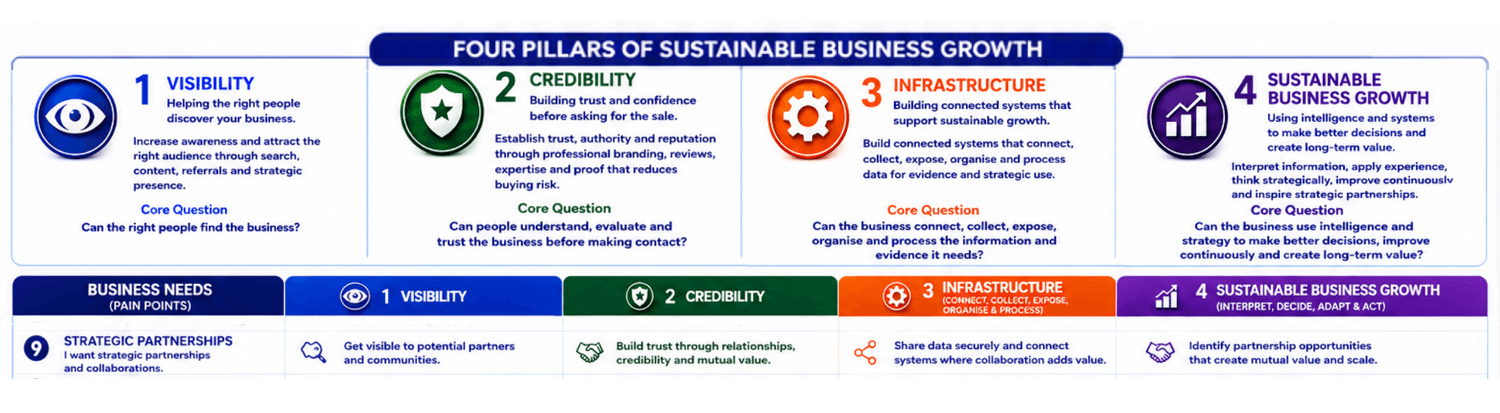
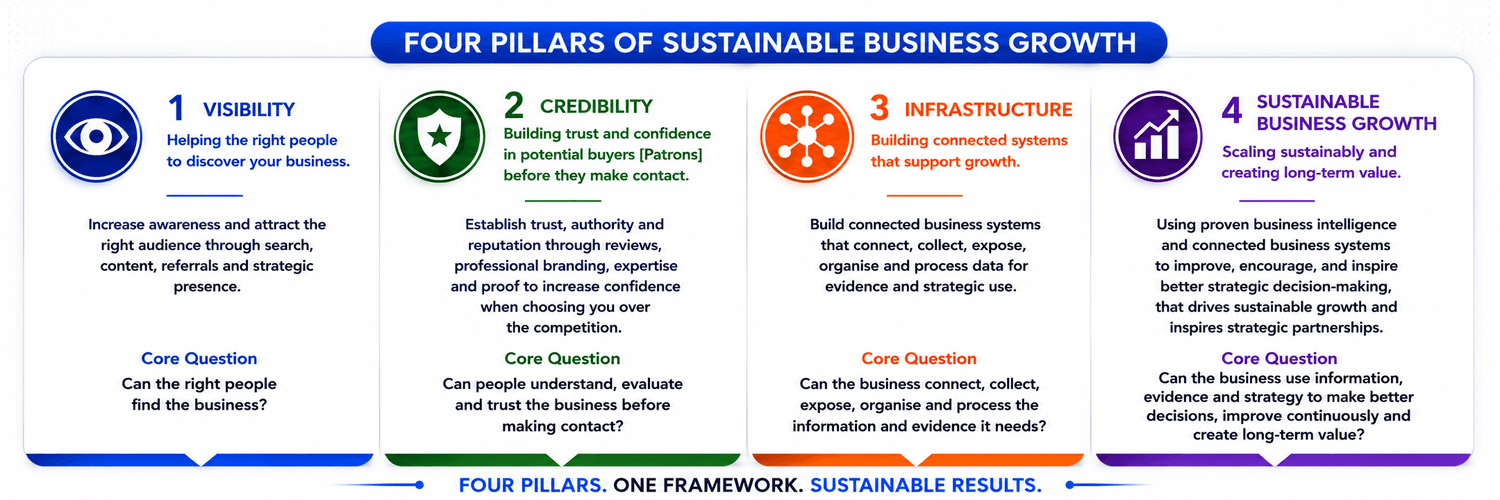
This is another reason why visibility, credibility and infrastructure all support successful partnerships.
Creating Partnership Systems
Partnerships perform best when supported by clear processes.
Useful systems include:
Partner onboarding
Referral procedures
Shared communication channels
Service agreements
Performance tracking
Regular review meetings
Documentation
Marketing collaboration plans
Strong systems reduce misunderstandings and strengthen long-term relationships.
The Growth4biz Partnership Framework™
At Growth4biz Media, we believe successful partnerships are built intentionally—not by chance.
The partnership journey typically follows this progression:
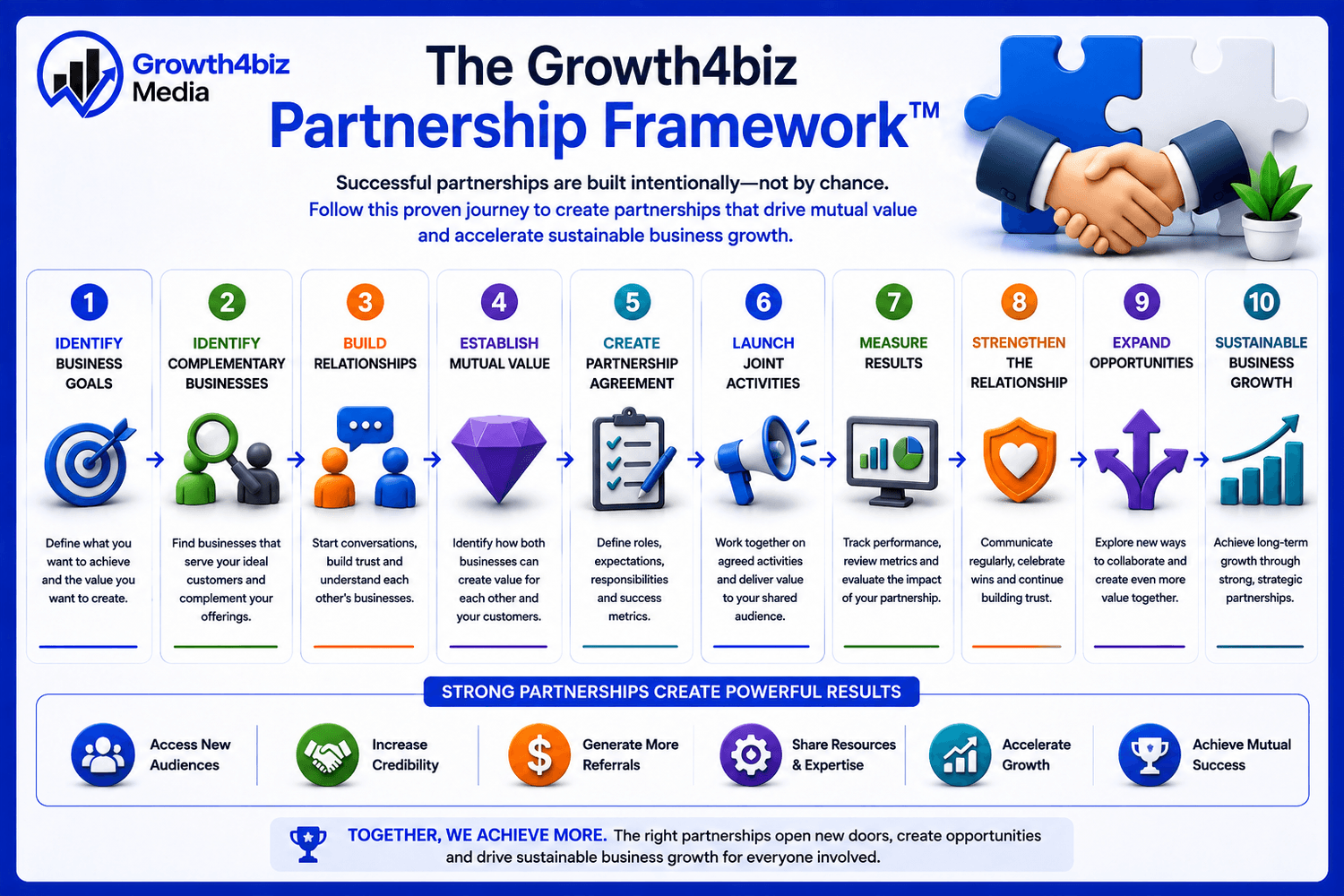
Each stage builds upon the previous one, creating partnerships that continue delivering value over time.
Examples of Strategic Partnerships
Almost every industry offers partnership opportunities.
Examples include:
Website designers and photographers
Accountants and business consultants
Estate agents and bond originators
Lawyers and financial advisors
Printers and graphic designers
Marketing agencies and copywriters
Electricians and solar installers
IT support providers and cybersecurity specialists
Gyms and nutrition coaches
Event planners and photographers
These businesses serve similar customers while offering different expertise.
Partnership Mistakes to Avoid
Not every partnership succeeds.
Common mistakes include:
Partnering without clear objectives
Focusing only on short-term gains
Choosing businesses with conflicting values
Poor communication
No written agreement
Lack of accountability
Unequal contribution
Failing to measure results
Healthy partnerships require ongoing investment.
Measuring Partnership Success
Like every business activity, partnerships should be evaluated.
Useful performance indicators include:
Referral enquiries
New customers acquired
Revenue generated
Joint marketing campaigns completed
Customer satisfaction
Website traffic from partners
Brand exposure
Repeat collaboration opportunities
The strongest partnerships improve over time because both businesses continually learn and refine how they work together.
Why Partnerships Support Sustainable Business Growth
Many businesses believe growth comes from working harder.
In reality, sustainable growth often comes from working smarter.
Strategic partnerships allow businesses to:
Reach more customers
Deliver more complete solutions
Build stronger reputations
Reduce costs
Share expertise
Improve innovation
Create greater customer value
Rather than trying to become everything to everyone, successful businesses build trusted networks of complementary experts.
Frequently Asked Questions:
A strategic business partnership is a collaborative relationship between independent businesses that work together to create mutual value and achieve shared goals.
Start by identifying businesses that serve the same audience but offer complementary services. Build relationships before discussing formal partnerships.
Yes.
Even simple partnerships benefit from written agreements that clearly define responsibilities, expectations and objectives.
Absolutely.
Strategic partnerships often allow small businesses to compete more effectively by expanding their capabilities without significantly increasing overheads.
Referral partners primarily exchange customer referrals.
Strategic partners typically collaborate more deeply through shared marketing, services, systems or long-term business initiatives.
Final Thoughts
No business grows entirely alone.
Behind many successful businesses is a network of trusted relationships that creates greater value than any single organisation could achieve independently.
Strategic partnerships expand opportunities, strengthen credibility, improve customer experiences and accelerate sustainable business growth.
Within the Growth4biz Framework™, partnerships represent more than networking.
They represent the stage where businesses begin leveraging relationships to multiply the effectiveness of everything they've already built—visibility, credibility, infrastructure, systems and teams.
Businesses that build strong partnerships often discover that sustainable growth isn't achieved by doing everything themselves.
It's achieved by working with the right people.
Continue Your Growth Journey
Strategic partnerships are one important step in building a sustainable business.
The next stage of the Growth4biz Framework™ focuses on Sustainable Business Growth—bringing together visibility, credibility, infrastructure, people and partnerships into a business that can continue growing for years to come.
Explore the next guide to learn how to build a business designed for long-term success.
SHARE




Copyright 2026 • Growth4biz Media (Pty) Ltd.