Business Systems Guide: How to Build Systems That Save Time, Reduce Chaos and Scale Your Business
Introduction
Many businesses don't struggle because they lack customers.
They struggle because they lack systems.
When you're starting out, it's normal to manage everything yourself.
You answer every phone call.
Respond to every email.
Prepare every quotation.
Send every invoice.
Follow up with every customer.
Remember every appointment.
As your business grows, those same habits quickly become bottlenecks.
Enquiries get missed.
Important files disappear.
Customers wait longer for responses.
The owner becomes overwhelmed.
Growth starts creating stress instead of opportunity.
This is why successful businesses don't simply work harder—they build systems.
Business systems reduce repetitive work, improve consistency and create a stronger foundation for sustainable growth.
In this guide, you'll learn what business systems are, why they matter, the essential systems every growing business needs, and how to begin building a business that can grow without becoming chaotic.
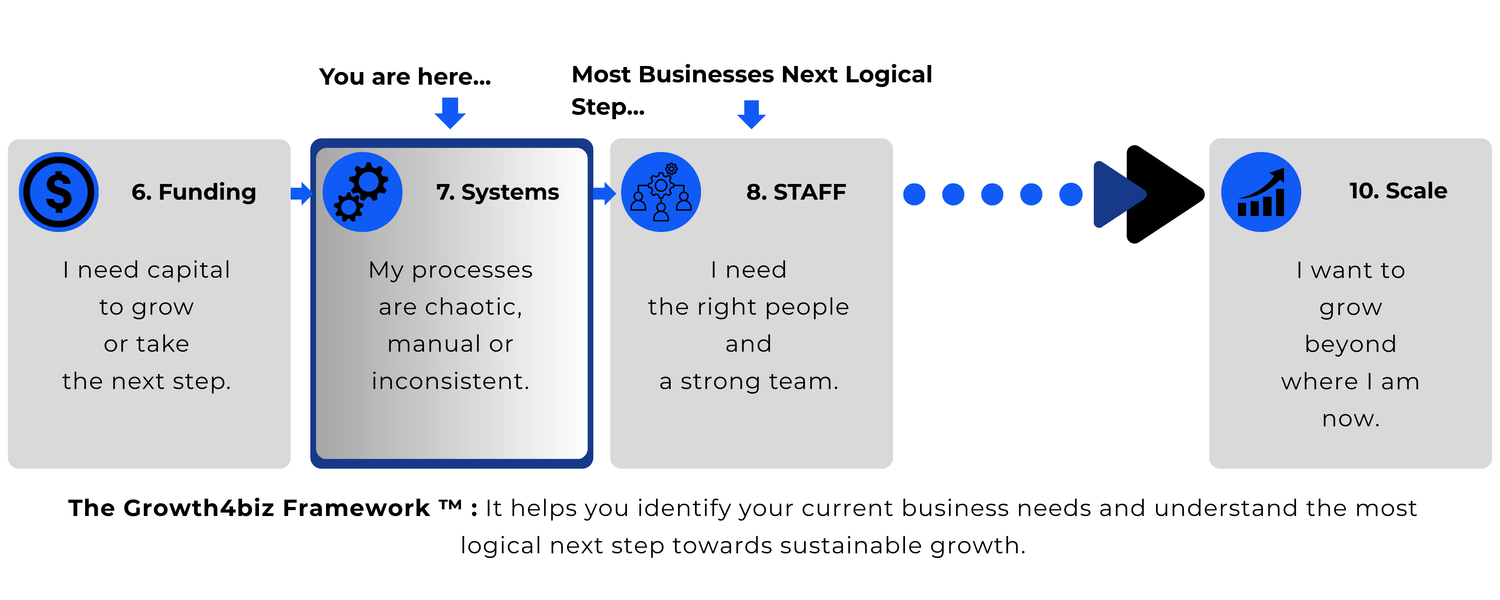
Your Position in the Growth4biz Framework™
Need — Business Systems
What Are Business Systems?
Business systems are repeatable processes that help your business complete important tasks consistently.
Instead of relying on memory or individual people, systems provide a structured way of working.
For example, instead of remembering to follow up with every enquiry manually, a business system ensures every new enquiry automatically enters a process.
That process might include:
Recording customer information
Sending a confirmation email
Scheduling follow-up reminders
Assigning responsibilities
Tracking progress
Recording outcomes
The goal isn't to make your business robotic.
The goal is to make excellence repeatable.
Why Business Systems Matter
Businesses without systems often experience the same problems repeatedly.
Business systems help eliminate unnecessary friction while making growth more manageable.
Some of the biggest benefits include:
Faster response times
Fewer mistakes
Improved customer experience
Better team collaboration
Easier staff training
More consistent service delivery
Increased productivity
Greater profitability
Improved scalability
Rather than constantly solving the same problems, systems allow your business to focus on delivering value.
Signs Your Business Needs Better Systems
Many business owners don't realise they have a systems problem until growth becomes overwhelming.
You may need stronger business systems if you regularly experience:
Forgotten customer enquiries
Lost quotations or invoices
Files stored in multiple locations
Customers repeating information
Inconsistent service quality
Staff asking the same questions repeatedly
Delayed responses
Owner dependency
Constant firefighting instead of planning
Feeling busy without making meaningful progress
These aren't usually people problems.
They're often systems problems.
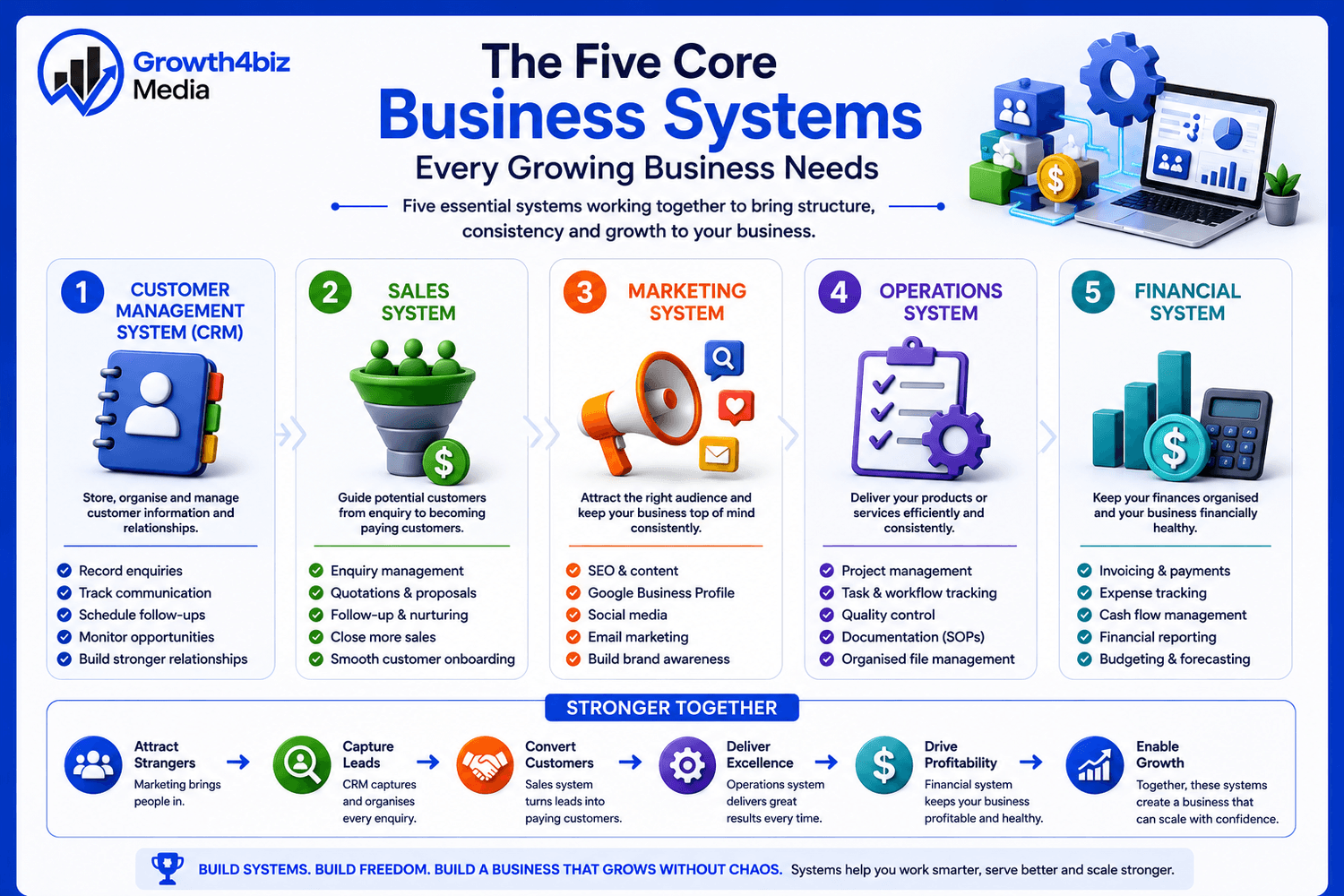
The Five Core Business Systems Every Growing Business Needs
1. Customer Management System (CRM)
Your Customer Relationship Management (CRM) system stores and manages customer information.
A CRM helps you:
Record enquiries
Track communication
Schedule follow-ups
Monitor sales opportunities
Improve customer relationships
Without a CRM, valuable opportunities can easily be forgotten.
2. Sales System
A sales system guides potential customers from their first enquiry through to becoming paying customers.
A typical sales system includes:
Initial enquiry
Qualification
Quotation or proposal
Follow-up
Objection handling
Closing the sale
Customer onboarding
A structured sales process creates consistency and improves conversion rates.
3. Marketing System
Marketing should consistently attract qualified visitors to your business.
A strong marketing system may include:
Search Engine Optimisation (SEO)
Google Business Profile
Blog articles
Educational content
Social media
Email marketing
Video content
Strategic partnerships
Marketing shouldn't rely on random campaigns.
It should operate as an ongoing system.
4. Operations System
Operations systems help your business deliver products and services efficiently.
These systems often include:
Project management
Task management
Quality control
Internal documentation
File management
Communication workflows
Well-designed operational systems reduce delays and improve customer satisfaction.
5. Financial System
Healthy businesses require organised financial systems.
Examples include:
Invoicing
Expense tracking
Budgeting
Cash flow monitoring
Financial reporting
Tax preparation
Accurate financial information helps business owners make better decisions.
The Growth4biz Business Systems Framework™
At Growth4biz Media, we view business systems as an interconnected digital infrastructure rather than isolated software tools.
Every system should support the next.
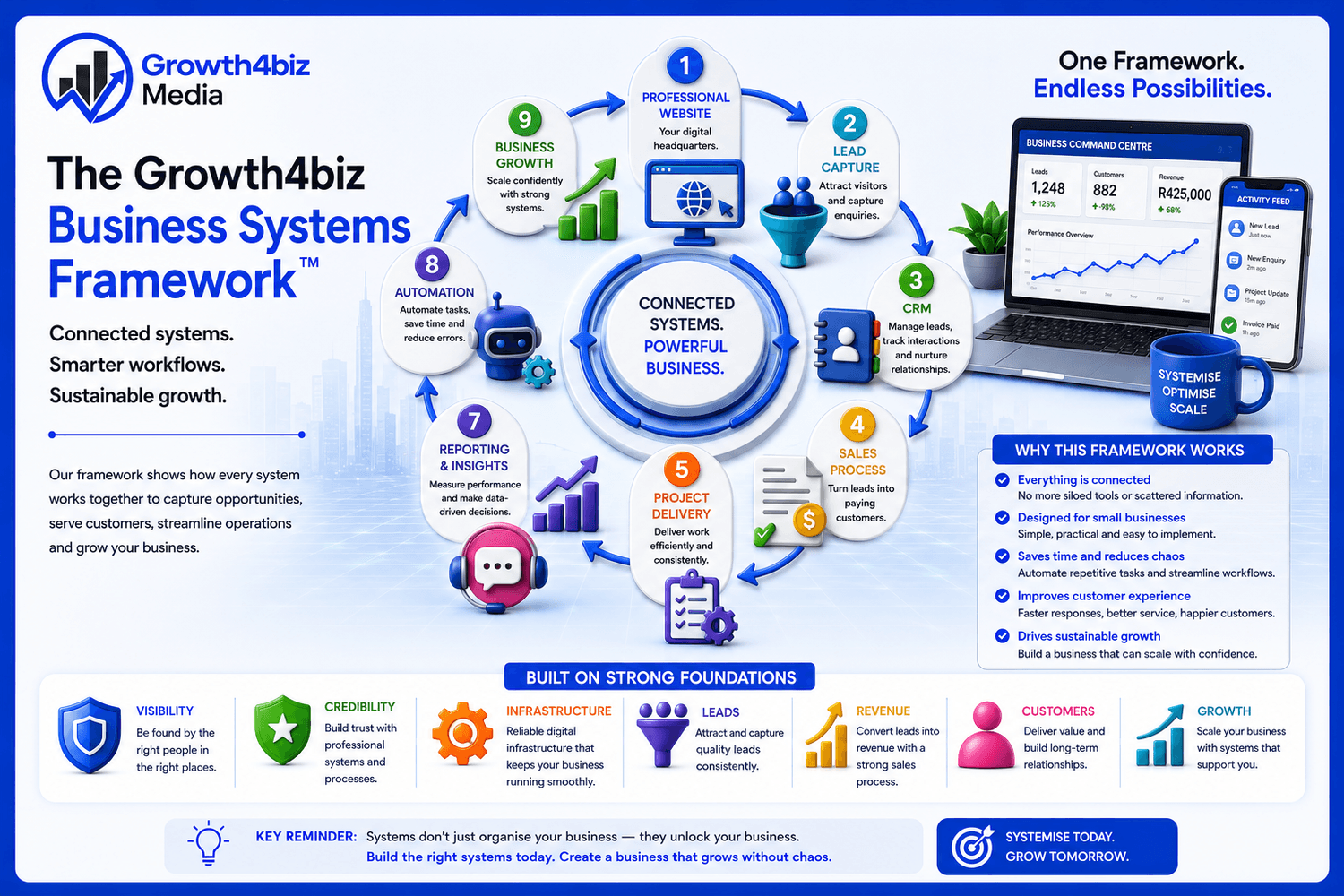
Every system should support the next.
A professional website captures enquiries.
Those enquiries enter a CRM.
The CRM supports your sales process.
Sales become customers.
Customers move through delivery workflows.
Projects generate reports and feedback.
Automation reduces repetitive work.
Management gains insights.
The result is a business that becomes more organised, more productive and easier to scale.
Business systems work best when they work together.
Manual Processes vs Systemised Businesses
Growing businesses often transition from manual processes to documented systems.
Manual Business
Systemised Business
1. Sticky notes
1. CRM
2. Memory
2. Standard operating procedures
3. Individual knowledge
3. Shared documentation
4. Manual follow-up
4. Automated reminders
5. Repeated mistakes
5. Repeatable workflows
6. Owner dependent
6. Team supported
7. Reactive
7. Proactive
The objective isn't complexity.
It's consistency.
Automation Doesn't Replace People
One of the biggest misconceptions about business systems is that automation replaces employees.
In reality, automation removes repetitive administrative work so people can focus on higher-value activities.
For example:
Instead of:
Receiving an enquiry
Manually recording customer details
Sending an email
Creating reminders
Remembering to follow up
Automation can:
Capture the enquiry automatically
Store customer information
Send a welcome email
Schedule reminders
Notify your team
Track progress
Automation supports people—it doesn't replace them.
Common Business Systems Every Small Business Should Consider
As businesses grow, they often introduce specialised systems for different areas of the business.
Examples include:
Customer Relationship Management (CRM)
Accounting software
Project management platforms
Document management
Appointment booking
Email marketing
Workflow automation
Team communication
Analytics and reporting
Customer support systems
The specific tools matter less than how well they work together.
When Should You Build Business Systems?
Many businesses wait until they're overwhelmed before investing in systems.
Unfortunately, that's usually too late.
The best time to improve your systems is before growth creates bottlenecks.
As your business expands, every new customer increases operational complexity.
Businesses with good systems grow more confidently because their processes are already prepared.
Think of systems as building stronger foundations before adding more floors to the building.
Common Mistakes Businesses Make
Many businesses invest in software expecting it to solve operational problems.
Software alone isn't the answer.
Common mistakes include:
Buying software without improving processes
Using too many disconnected applications
Failing to document workflows
Ignoring staff training
Automating broken processes
Not measuring performance
Depending entirely on one person
Successful systems begin with clear processes.
Technology simply helps those processes operate more efficiently.
Business Systems Support Every Stage of Growth
Business systems influence almost every aspect of your business.
They strengthen:
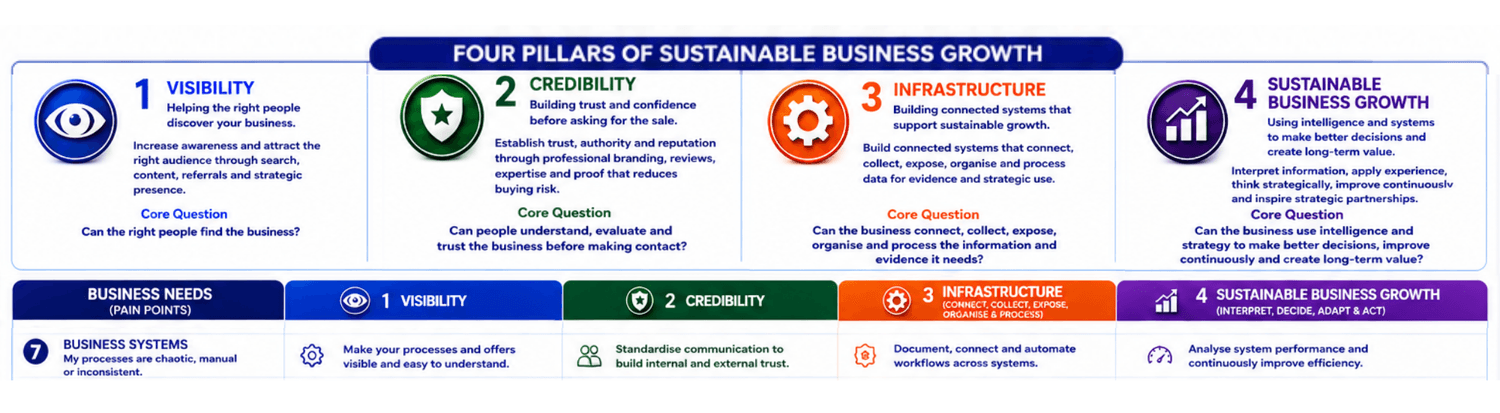
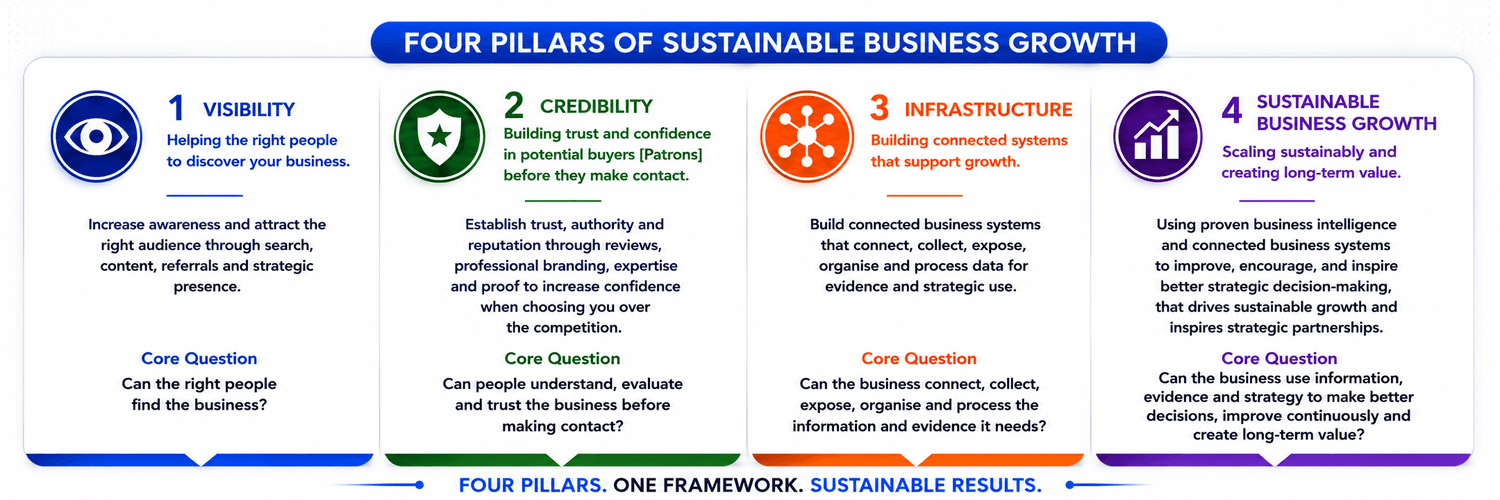
Visibility
Better systems help manage your marketing activities consistently.
Credibility
Professional communication and reliable service build trust.
Lead Generation
CRM systems help capture and manage enquiries effectively.
Customer Experience
Consistent processes create predictable customer outcomes.
Revenue
Efficient businesses often reduce waste while improving profitability.
Growth
Scalable systems make expansion easier and more sustainable.
Rather than existing independently, business systems connect every part of your organisation.
Final Thoughts
Successful businesses aren't built on hard work alone.
They're built on repeatable systems that consistently produce excellent results.
Without systems, growth often creates confusion.
With the right systems, growth becomes more manageable, predictable and sustainable.
Whether you're organising customer enquiries, improving internal communication, automating repetitive tasks or preparing your business to scale, investing in strong business systems is one of the smartest long-term decisions you can make.
At Growth4biz Media, we believe digital infrastructure is more than websites or software.
It's about creating connected systems that help businesses become more visible, more credible, more efficient and better prepared for sustainable growth.
Because businesses don't scale through effort alone.
They scale through systems.
SHARE



Copyright 2026 • Growth4biz Media (Pty) Ltd.