Business Team Guide: How to Build a Strong Team That Helps Your Business Grow
Introduction
Every successful business eventually reaches a point where one person can no longer do everything.
The owner answers every phone call.
Responds to every email.
Creates every quotation.
Completes every project.
Follows up with every lead.
Solves every customer problem.
At first, this level of involvement feels manageable.
Over time, it becomes one of the biggest obstacles to growth.
Many business owners assume hiring more people is the solution.
In reality, hiring without clear systems often creates even more problems.
Without documented processes, onboarding, clear responsibilities and operational systems, adding more people often increases complexity instead of increasing capacity.
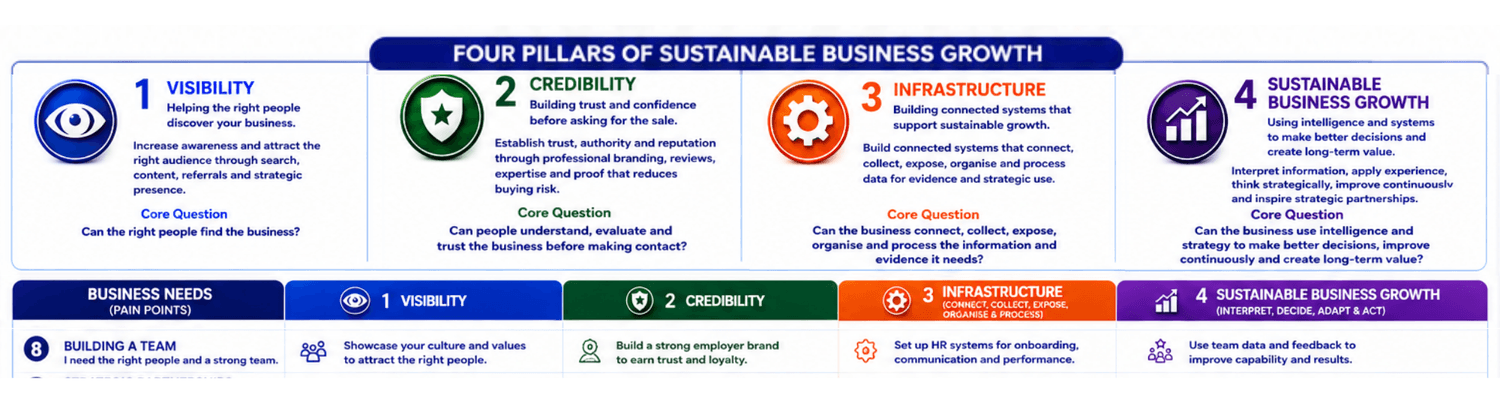
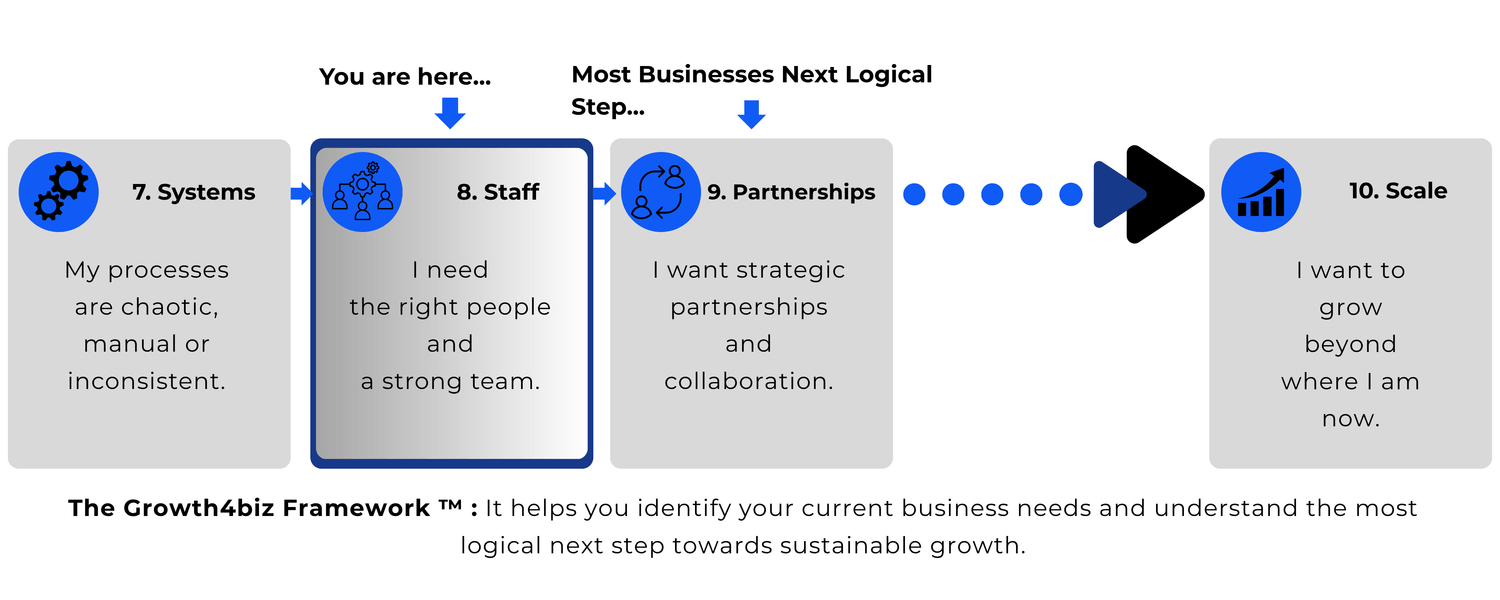
That's why team growth always follows systems growth within the Growth4biz Framework™.
In many cases employees become dependent on the owner.
Tasks are completed inconsistently.
Communication breaks down.
Mistakes increase.
Customers receive different experiences.
The businesses that scale successfully don't simply hire more staff—they build strong teams supported by strong systems.
This guide explains when to hire, who to hire, how to build an effective team, and why your business systems are just as important as the people you employ.
Your Position in the Growth4biz Framework™
Need — Business Team
Why Hiring Matters
People are one of the greatest assets any business can have.
The right employees increase your business's capacity to serve customers, improve productivity and support long-term growth.
Hiring isn't simply about reducing your workload.
It's about creating a business that can operate beyond the limitations of one person.
Every new team member represents additional knowledge, skills and capacity.
When supported by clear systems, great people become a powerful competitive advantage.
When Should You Hire Your First Employee?
Many small businesses wait too long before hiring.
Others hire too early.
The right time usually isn't based on revenue alone.
It's based on capacity.
Common signs you're ready to hire include:
You're consistently turning away work.
Customer enquiries are delayed.
Administrative tasks consume most of your day.
You're regularly working evenings and weekends.
Business growth has slowed because you're doing everything yourself.
Service quality is beginning to decline.
You spend more time managing work than growing the business.
Hiring should solve capacity constraints—not create additional confusion.
The Biggest Hiring Mistakes Small Businesses Make
Many hiring problems begin long before the interview process.
Common mistakes include:
Hiring without clearly defined responsibilities.
Employing friends or family without professional expectations.
Hiring because you're overwhelmed rather than planning ahead.
Providing little or no onboarding.
Failing to document business processes.
Expecting employees to "figure it out."
Not measuring performance.
Hiring before building systems.
Great employees still need great processes.
Who Should You Hire First?
Every business is different.
Rather than hiring based on job titles, hire based on your biggest operational bottleneck.
Your first hire might be:
Administrative Assistant
Customer Support Representative
Sales Representative
Marketing Assistant
Bookkeeper
Operations Coordinator
Virtual Assistant
Project Administrator
The objective is to remove repetitive work from the business owner so more time can be invested in leadership and growth.
The Employee Journey
Successful hiring doesn't end when someone accepts a job offer.
Building a high-performing team is an ongoing process.
The employee journey typically follows this path:
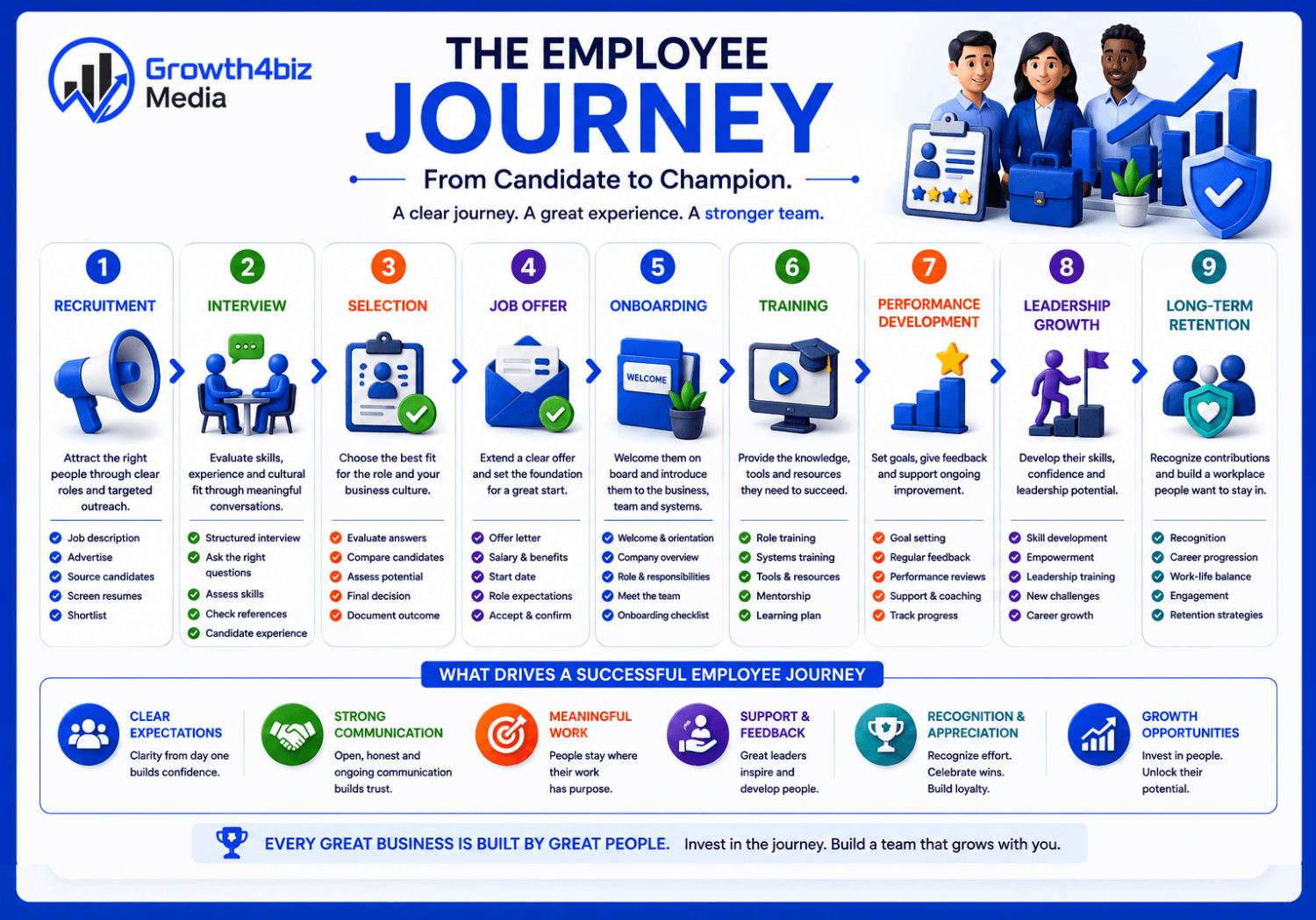
Every stage strengthens the next.
Why Onboarding Is So Important
Many businesses invest significant time finding the right employee but very little time preparing them for success.
Effective onboarding should introduce new employees to:
Company values
Business goals
Customer expectations
Internal systems
Software platforms
Communication procedures
Standard Operating Procedures (SOPs)
Team responsibilities
A structured onboarding process improves confidence, consistency and productivity.
Build Systems Before You Build Teams
One of the biggest lessons in business growth is this:
People should operate your systems—not become your systems.
Without documented processes:
Employees ask the same questions repeatedly.
Tasks are completed differently by different people.
Mistakes become common.
Business knowledge remains trapped in the owner's head.
Well-designed systems allow employees to work independently while maintaining consistent service quality.
Strong systems make strong teams possible.
Standard Operating Procedures (SOPs)
Every repetitive task should eventually become documented.
Examples include:
Responding to enquiries
Creating quotations
Customer onboarding
Sales follow-up
Social media publishing
Website updates
Complaint handling
Project delivery
Invoicing
Internal communication
SOPs reduce training time, improve consistency and make delegation easier.
Building a Positive Company Culture
Business growth isn't only about systems and processes.
It's also about people.
Healthy company cultures encourage:
Respect
Accountability
Learning
Collaboration
Innovation
Transparency
Professionalism
Customer focus
Culture influences employee satisfaction, customer experience and long-term business success.
Measuring Team Performance
Successful businesses continuously evaluate performance.
Useful metrics include:
Customer satisfaction
Response times
Projects completed
Sales performance
Productivity
Employee retention
Revenue generated
Goal achievement
Performance data helps identify opportunities for coaching, improvement and growth.
The Growth4biz Team Growth Framework™
At Growth4biz Media, we believe great teams are built through intentional leadership supported by strong systems.
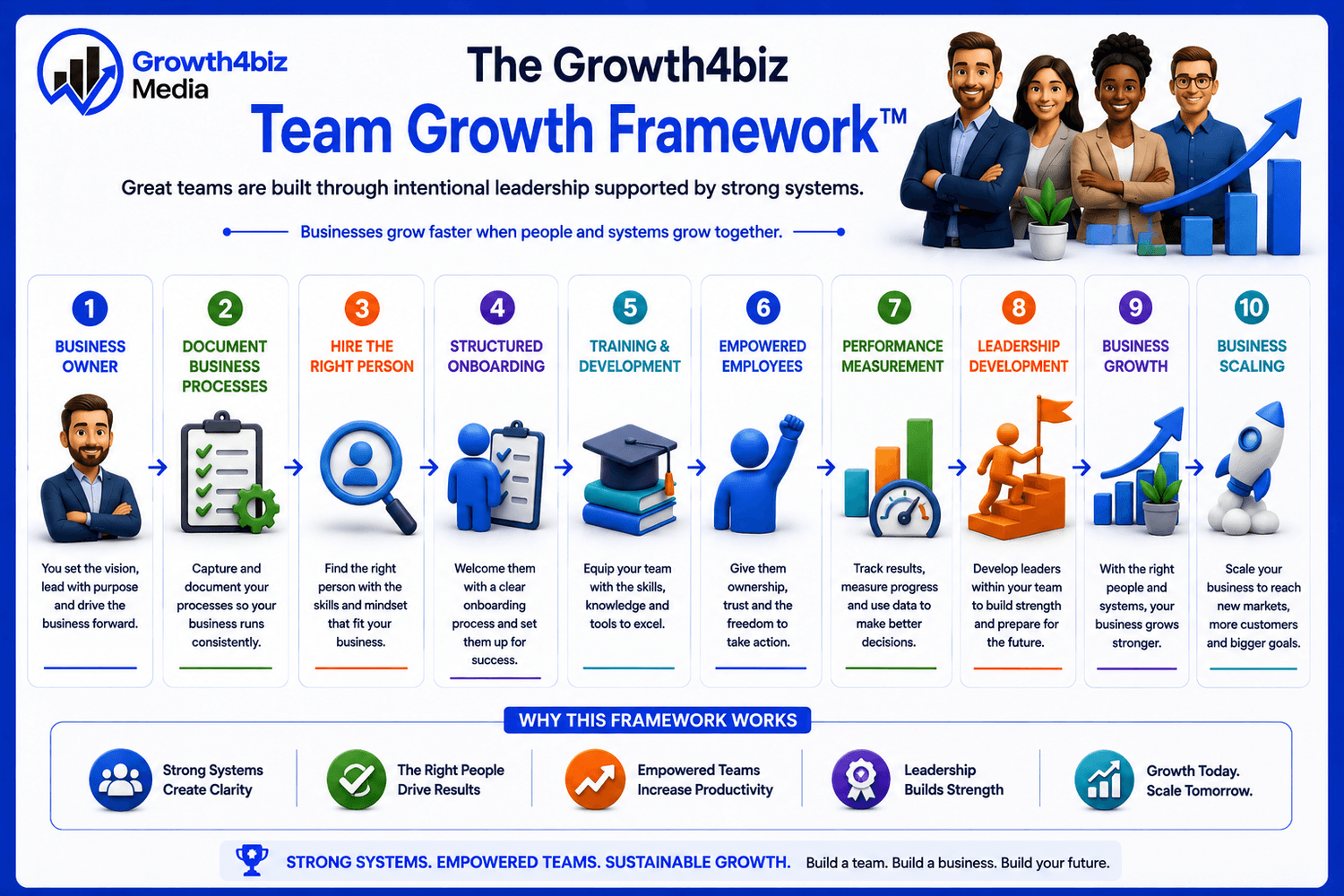
Businesses grow faster when people and systems grow together.
Common Hiring Challenges
Growing businesses often face:
Finding qualified employees
High staff turnover
Poor communication
Inconsistent service delivery
Lack of accountability
Limited training
Poor documentation
Owner dependency
These challenges become easier to manage when businesses invest in clear systems and leadership.
Practical Hiring Checklist
Before hiring your next employee, ensure your business has:
Clear job descriptions
Recruitment process
Interview questions
Employment agreements
Onboarding checklist
Standard Operating Procedures (SOPs)
Internal communication tools
Training plan
Performance review process
Company values
Preparation increases the likelihood of long-term hiring success.
Frequently Asked Questions:
When demand consistently exceeds your ability to deliver quality service without sacrificing growth or customer experience.
Onboarding is the structured process of introducing new employees to your business, systems, culture and responsibilities.
Standard Operating Procedures improve consistency, reduce training time and make delegation more effective.
Hiring employees before establishing clear systems, expectations and documented processes.
By documenting your processes, building strong systems, hiring capable people and empowering them through effective leadership.
Final Thoughts
Hiring is one of the most important investments a growing business can make.
The right people increase your business's capacity, improve customer service and create opportunities for sustainable growth.
However, people alone don't build successful businesses.
People supported by strong systems do.
By investing in structured hiring, effective onboarding, documented processes and a positive company culture, you create a business that can continue growing beyond the limits of one individual.
At Growth4biz Media, we believe successful businesses aren't built by owners doing everything themselves.
They're built by teams empowered with the right systems, leadership and infrastructure.
Strong people.
Strong systems.
Sustainable business growth.
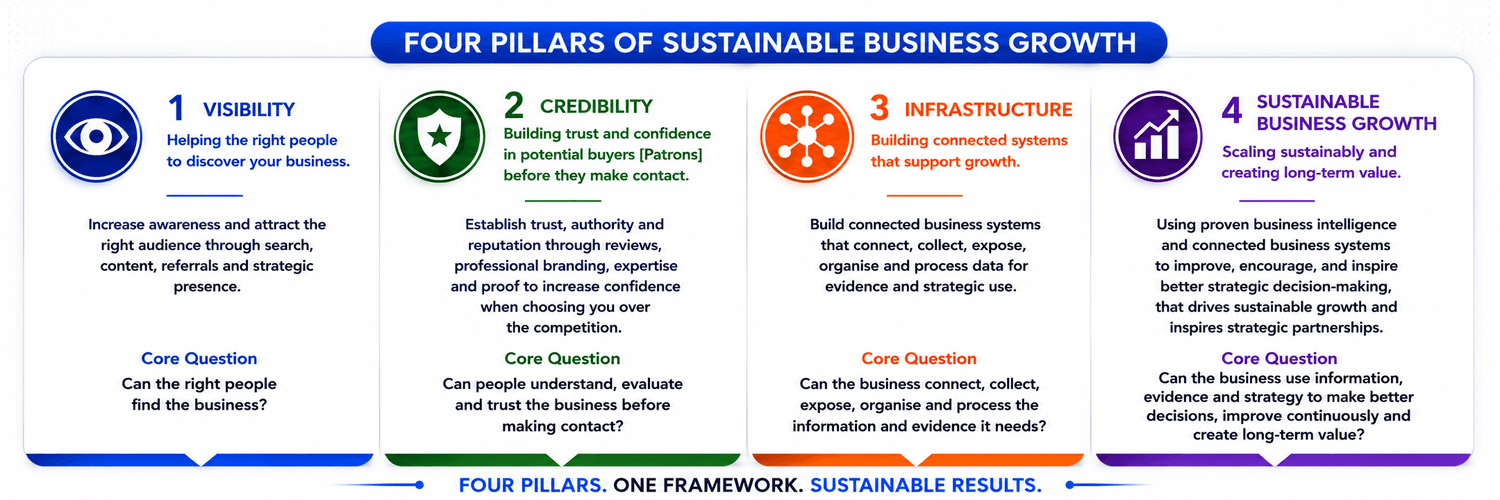
SHARE



Copyright 2026 • Growth4biz Media (Pty) Ltd.